This website uses cookies, including third party ones, to allow for analysis of how people use our website in order to improve your experience and our services. By continuing to use our website, you agree to the use of such cookies. Click here for more information on our and .
overview
Australia’s urgent care landscape is rapidly evolving. With 90 Medicare Urgent Care Clinics now operational and 50 more launching by December 2025, the sector is experiencing unprecedented growth backed by $644 million in new government funding.
The Urgent Care Clinics Conference is the only dedicated national forum positioned at this unprecedented change. An unmissable gathering for urgent care professionals, industry leaders, innovative practitioners, and forward-thinking healthcare administrators for two intensive days of learning and networking. This comprehensive event combines cutting-edge clinical insights with practical business strategies, designed specifically for the unique challenges facing urgent care providers in today’s rapidly evolving healthcare landscape.
Attendees can expect an immersive experience featuring expert-led sessions, interactive workshops, and peer-to-peer learning opportunities that address both clinical excellence and operational efficiency. The event also provides unparalleled networking opportunities, connecting attendees with potential partners, suppliers, and collaborators who are shaping the future of urgent care delivery.
Key Conference Topics
- Measuring UCC Effectiveness – What impact UCCs are having on ED presentations, patient outcomes, and cost-effectiveness based on early data
- Getting UCCs Up and Running – How PHNs choose locations, run tenders, and work with communities to open new clinics
- New Funding Rules Coming – Changes from fixed payments to performance-based contracts starting October 2025
- Staffing Your UCC – Why some clinics can’t find doctors while others have GPs lining up to work there
- Should UCCs Share Space with GP Clinics? – Pros and cons of co-locating versus running standalone urgent care
- Walk-ins vs Bookings – Different ways UCCs handle patient appointments and what works best
- Federal vs State UCCs – Managing when you have both types in the same area
- Collaboration and Building Local Partnerships – Working with hospitals, ambulances, pathology labs, and radiology services
- Improving Access in Regional Areas – How UCCs help when there aren’t many after-hours GPs around
- Tech Problems and Solutions – Dealing with telehealth gaps, phone triage, and getting the right IT systems
- Rolling Out 50 New UCCs – Managing the big expansion happening between October and December
- Teaching Practice Managers the Ropes – Helping managers understand how the UCC business model works
- Keeping Quality High – Making sure all UCCs deliver good care no matter who runs them or how they operate
Who attends?
- Primary Health Networks (PHNs) – Commissioning and oversight bodies
- Government – Federal and State Government Representatives – Policy makers and funding authorities
- Healthcare Corporates & Major Providers
- Emergency Department Leaders
- Healthcare Practitioners & Clinical Leaders
- Investment & Development Professionals
- Real Estate Investors and Facility Developers
- Academic Researchers – Health economists and policy analysts
- Practice Managers – Seeking to understand the UCC model
What Makes This Event Unique
🎯 Only Dedicated UCC Conference in Australia
This conference focuses exclusively on urgent care clinic implementation, operation, and optimization—delivering specialized content you can’t find elsewhere.
⏰ Perfect Timing During Critical Transition
Positioned during the “niche transition period” when 50 new UCCs are launching and performance-based contracts begin October 2025—when insider knowledge is most valuable.
💰 Access to $644 Million in New Funding
Now is the time to be networking with decision makers and representatives controlling the next wave of UCC funding and expansion decisions.
🏥 Complete Ecosystem Representation
The only forum bringing together PHNs, government policy makers, major healthcare corporates, ED leaders, and successful UCC operators in one room.
Speakers

A/Prof Lindsey E. Fish
Chief, Division of Urgent Care, Medical Director, Federico F. Peña Southwest Urgent Care Clinic, Denver Health and Hospital & Associate Professor of Medicine, Division of General Internal Medicine, University of Colorado

Sarah Sinclair
Assistant Secretary – Urgent Care Branch, Primary Care Division, Australian Government Department of Health, Disability and Ageing

A/Prof John Adie
UCC Training & Education Lead, ForHealth Group

Dr Peter Kopp
Medical Director, Minor Injury and Illness Clinic and Virtual Acute Care Service | Sunshine Coast Health

Dr Simon Rohde
Emergency Specialist, St Andrews War Memorial Hospital & Director, Fast Track Urgent Care

Dr Carolyn Roesler
Clinical Director SA- Head of Governance (Policies & Procedures), ForHealth

Ryan Lovett
Chair, Australasian College of Paramedicine

Dr Piers Truter
Raine Clinician Research Fellow, South Metropolitan Heath Service, Advanced Scope Physiotherapist, Emergency & Orthopaedic Departments, Fiona Stanley Hospital, Advanced Scope Physiotherapist, ED Musculoskeletal Diversion Pathway, Rockingham General Hospital

Dr Srividya Kota
Deputy Co-Chair ‘Urgent and emergency presentations to primary care’ Specific Interest Group and Medical Educator, RACGP, Director of Clinical Training, Queensland Health, Chief Investigator, RACGP 2026 Educational Research Grant and RACMA Candidate

Dr Carmel Mezrani
Clinical Director Community Chronic and Complex Care, Central Coast LHD

Scott Beattie
Director – Bupa Medical, Bupa Health Services

Darren Webb
Chief Community Officer, St John WA

Dr Jane Pearce
Health Consumer & Advocate

Adj. Associate Professor Michelle Murphy ASM
Head of Quality & Patient Experience – Urgent Care, ForHealth
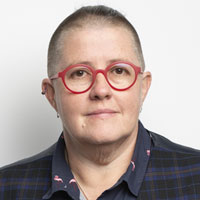
Professor Lisa Nissen
Director and Taylor Family Chair, HERA Program Director - Health Workforce Optimisation, Centre for the Business & Economics of Health, The University of Queensland

Dr Alistair Sullivan
CEO, White Cross Healthcare, Founding member, Royal New Zealand College of Urgent Care

Nicole Carter
Nurse Practitioner and PhD Candidate, Curtain University

Associate Professor Nigel Barr
Discipline Lead Paramedicine, School of Health, University of Sunshine Coast

Dr Rubina Bunwaree
Consultant Emergency Physician & Clinical Lead, Barwon Health North
Agenda







Pricing
Event Code of Conduct
We want everyone who comes to our events to have a great experience. This code explains our expectations and rules, which includes general good practice behaviour, and how to report anything witnessed or experienced that goes against them. Read our Event Code of Conduct here.
when & where
16 - 17 Jun 2026
Swissotel Sydney
68 Market St,
Sydney NSW 2000
(02) 9238 8888
www.swissotelsydney.com.au
SPECIAL ACCOMMODATION RATE
Secure your accommodation at the Swissotel Sydney with a 12% discount* off the best available flexible room only rate at the time of booking.
To book this rate, please click here and follow the below instructions.
To load/see the rates available please enter the codes as per below:
Click on the Book Now link above and scroll to ‘Our accommodation’
> Enter your booking dates
> Click on the drop down for “Special rates”
> Enter the code SCP2108566 in “Business client with contract”
> Enter the code IN435AU828 in “Access code”
> Click on “See rates”
* Rooms and rates are subject to availability at the time of booking, we suggest booking early to avoid disappointment.
Alternatively, please contact the hotel reservations team directly on 02 9238 8888 between 9am – 5pm Monday to Friday or email [email protected]
contact
Still have a question?
General Information & Registration
Customer Service
+61 2 9080 4307
[email protected]
Sponsorship & Exhibition Opportunities
David Espitia
+61 2 9080 4311
[email protected]
Speaking Enquiries
Frankie Brewer
+61 439 780 927
[email protected]
Marketing & Media Enquiries
Paul O’Connor
[email protected]